Kenya receives strong sunshine for most of the year, and that makes solar a natural fit for pumping water. Farms irrigating vegetables, schools and hospitals supplying hundreds of people, and homes with their own boreholes are all moving away from diesel generators and grid-only pumping. They want lower running costs and fewer interruptions.
Solar pumping is not automatically the right answer for every site, though. It works best when the system is designed around the water source, the daily demand and adequate storage. This guide explains how solar pumping compares with the alternatives and how to choose a system that will last.
How solar water pumping works
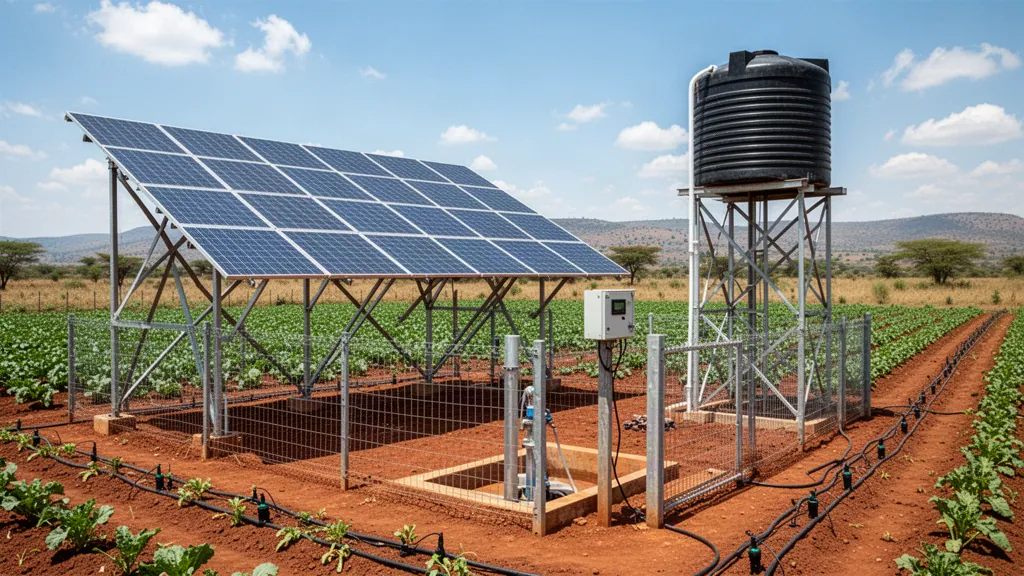
A solar pumping system has four main parts:
- Solar panels (the PV array), which convert sunlight into electricity.
- A pump controller or inverter, which matches the panels’ variable output to the pump. It usually provides protection against dry running, overload and over-voltage, and often allows a float switch or level sensor to stop pumping when the tank is full.
- The pump: usually a submersible pump in a borehole, or a surface pump drawing from a river, dam or shallow well.
- Storage: typically an elevated or ground tank that holds the day’s water for use at night and on cloudy days.
The key design idea is simple: store water, not electricity. Rather than buying batteries, most well-designed solar pumping systems pump during daylight into a tank sized to cover the hours, or days, when the sun is weak.
Solar, grid or diesel? An honest comparison
| Factor | Solar | Grid electricity | Diesel generator |
|---|---|---|---|
| Up-front cost | Higher (panels, structure, controller) | Low to moderate if a connection is nearby; high if a line must be extended | Moderate |
| Running cost | Very low: no fuel or tariff | Ongoing electricity bills | Fuel, oil and frequent servicing |
| Availability | Daylight hours; depends on weather | Any time, subject to outages | Any time, if fuel is available |
| Maintenance | Low: panel cleaning, inspections | Low | High: filters, oil, overhauls |
| Price exposure | Minimal after installation | Tariff changes | Fuel price changes and fuel theft |
| Noise and emissions | None in operation | None on site | Noise, fumes, spill risk |
Diesel pump prices in Kenya are reviewed monthly by the Energy and Petroleum Regulatory Authority (EPRA), which makes generator running costs hard to predict. Many properties choose a hybrid system: solar provides daytime pumping, and the grid or a generator serves as backup when demand peaks or during extended cloudy periods.
Selecting the right solar pump
A reliable design starts with three numbers:
- Daily water demand in litres or cubic metres per day, including growth and peak-season needs.
- Total dynamic head: the vertical lift from the pumping water level to the top of the tank, plus pipe friction losses.
- Source capacity: for boreholes, the safe yield and the pumping water level established by the test-pumping report.
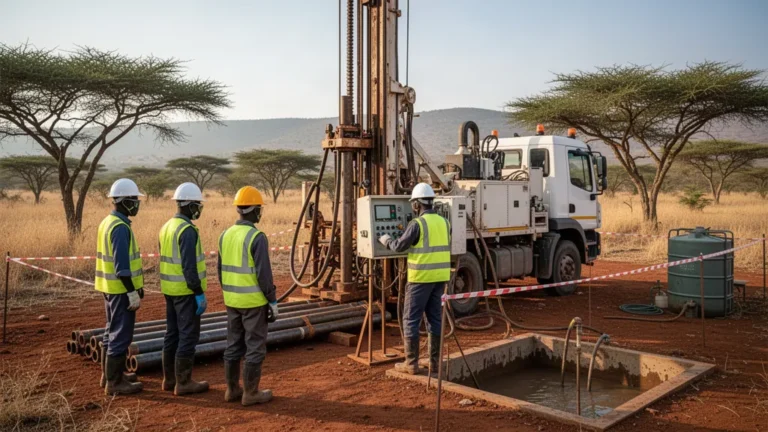
The pump must deliver the required daily volume within the available sun hours without exceeding the safe yield of the borehole. Oversizing the pump is a common and expensive mistake: it can draw the water level down to the pump and damage both the pump and the borehole. If your borehole is new, read our guide to drilling a borehole in Kenya on why test pumping matters.
Solar panels, controllers and the installation
- Array sizing: the array should be sized for the pump’s power at the site’s solar resource, with allowance for heat, dust and ageing. Undersized arrays give poor morning and evening output.
- Orientation and shading: near the equator, panels are mounted at a modest tilt that allows rain to wash them, and away from trees, buildings and tanks that cast shade.
- Structure and security: galvanised mounting, firm foundations, fencing and anti-theft fixings are worthwhile, especially on remote farms.
- Electrical protection: correct cable sizes, isolators, earthing and surge protection, with the controller in a ventilated, weatherproof enclosure.
- Licensed installers: EPRA licenses solar PV technicians and contractors in Kenya, and in June 2026 it published a notice requiring them to apply through its online licensing portal. Ask to see a current EPRA licence before you hire.
Daytime pumping and water storage
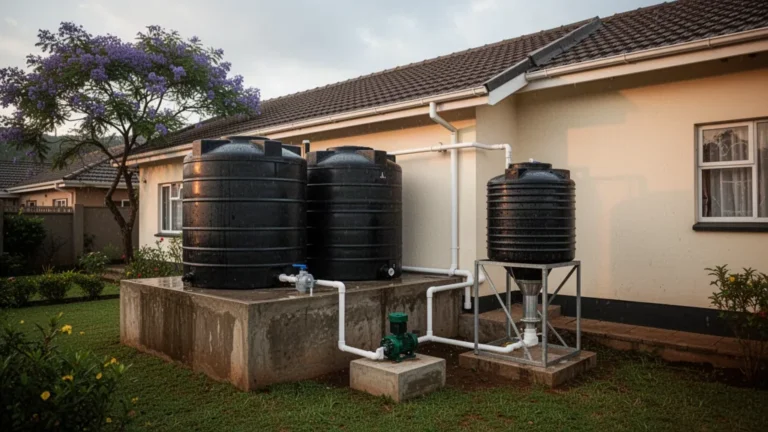
Because the pump runs in daylight, storage is part of the system, not an extra. Tank sizing depends on how many hours or days of demand you need to cover. A home might keep one to two days’ supply. A school, clinic or farm may need more, depending on how critical the water is and how variable the weather is. Elevated tanks also provide gravity pressure, so taps and drip lines work without a second pump.
Level controls (a float switch or electrode sensors) stop the pump when the tank is full and protect the borehole from unnecessary pumping. See our guide on water storage systems for Kenyan properties.
Irrigation and institutional applications
- Drip and sprinkler irrigation: solar pairs well with drip irrigation because both match steady daytime operation. Farmers can irrigate directly in daylight or fill a tank for gravity-fed drip lines.
- Livestock and water troughs: remote watering points without power lines.
- Schools, hospitals and churches: lower monthly bills and less dependence on fuel deliveries. These often run as hybrid systems for critical supply.
- Homes and estates: solar borehole pumping combined with elevated storage and a small booster pump for pressure.
Maintenance
Solar pumping systems are low-maintenance, but they are not maintenance-free:
- Clean the panels regularly, especially in dusty areas, using clean water and a soft brush.
- Check for shading from growing trees or new structures.
- Inspect cables, connections and earthing for damage, rodents and corrosion.
- Keep the controller enclosure clean, dry and ventilated, and record any fault codes.
- Monitor the daily volume pumped. A gradual drop can indicate a worn pump, falling water levels or a dirty array.
- Have the pump and borehole inspected periodically by a qualified technician.
Thinking about lifecycle costs
Comparing systems on purchase price alone is misleading. A fair comparison over 10 to 20 years includes:
- the capital cost: panels, structure, controller, pump, cabling and storage;
- energy costs: fuel or electricity, which solar largely avoids;
- maintenance and repairs, including generator overhauls or pump replacement;
- downtime costs: crops lost or services interrupted when pumping stops;
- the expected life of components. Panels typically last much longer than controllers and pumps.
Ask your installer for a written comparison based on your own demand and head, rather than a generic payback claim.
Choosing the right system: a short checklist
- Do you know your daily water demand and peak-season needs?
- For a borehole, is the pump sized from the test-pumping results?
- Is enough storage included to cover nights and cloudy days?
- Does the controller provide dry-run and level protection?
- Is the installer licensed by EPRA, and will they provide drawings and a commissioning report?
- Is backup power needed for critical supply?
How Weber Works can help
Weber Works Ltd designs and installs solar water solutions, pumping systems and storage and distribution for homes, farms and institutions. We size the system around your source, your demand and your site.
This article is general guidance as at the review date shown. It is not a system design for your property.