Kenya’s water challenges swing between extremes. Some seasons bring heavy rain and flooding; others bring long dry spells, rationing and queues for water bowsers. For the October to December 2026 “short rains”, the Kenya Meteorological Service Authority’s seasonal outlook forecast above-average rainfall over much of the country, linked to a strong El Niño. That is a reminder that a wet season is the best time to prepare for the next dry one.
A well-designed storage system turns irregular supply, whether from a county utility, a borehole or the rain, into a steady supply for your home, school, hotel or business. This guide explains how to plan one.
Why storage matters: supply interruptions
Most Kenyan properties experience some form of interruption: scheduled rationing, pipe bursts, low pressure at peak times, pump or power failures, or seasonal drops in borehole yield. Storage gives you a buffer, so taps keep running while the supply is restored. For institutions such as schools, clinics and hotels, that buffer is part of operating safely.
Rainwater harvesting
Every roof is a catchment. As a rule of thumb, 1 mm of rain falling on 1 m² of roof yields about 1 litre of water, before losses. A simple estimate is:
Harvestable water (litres) ≈ roof area (m²) × rainfall (mm) × runoff coefficient
The runoff coefficient allows for splash, evaporation and first-flush losses. Around 0.8 is often used for metal roofs. For example, a 100 m² roof receiving 50 mm of rain in a storm could yield roughly 100 × 50 × 0.8 = 4,000 litres. Use rainfall records for your area, from the Kenya Meteorological Service Authority, to estimate a season’s potential.
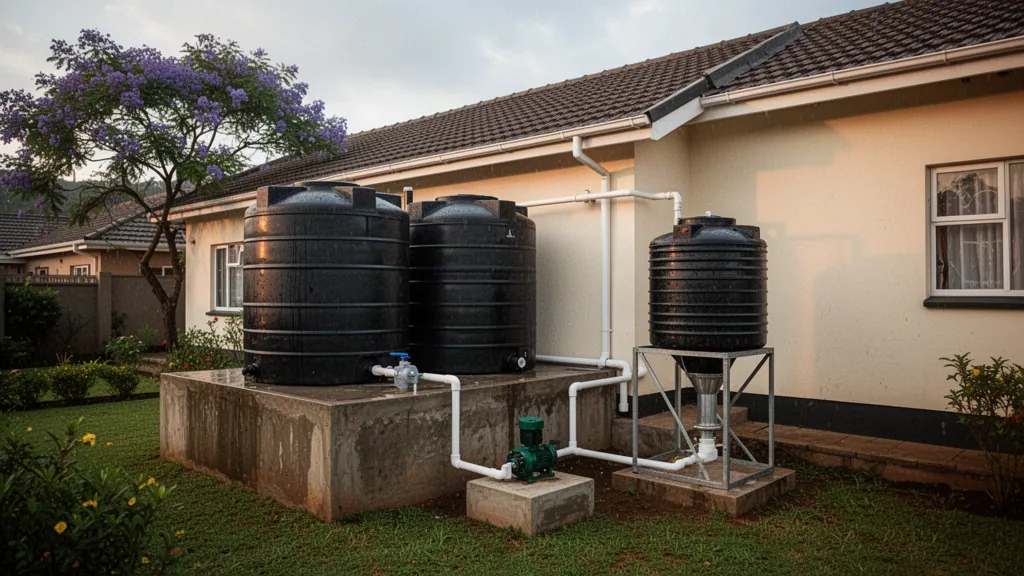
A good rainwater harvesting system includes:
- Clean, correctly sized gutters and downpipes, with leaf guards.
- A first-flush diverter, which discards the first, dirtiest runoff from the roof.
- Screened inlets and overflows, which keep out mosquitoes, rodents and debris.
- Safe overflow routing away from foundations, neighbours and septic systems.
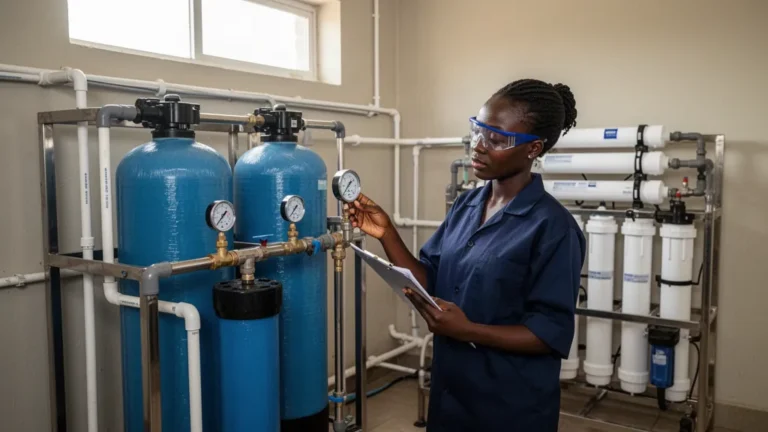
Harvested rainwater is excellent for flushing, cleaning, laundry and irrigation. If it will be used for drinking, it should be filtered and disinfected, and tested periodically.
Domestic and institutional storage
Storage needs depend on who uses the water and how critical it is:
- Homes: enough for typical daily use multiplied by the number of days without supply you want to cover.
- Schools and boarding facilities: sized for peak term-time occupancy, kitchens, sanitation and cleaning.
- Hospitals and clinics: a larger, protected reserve, often with separate drinking-water storage and backup pumping.
- Hotels and apartments: peak occupancy, laundries, kitchens, landscaping and, where present, swimming pools.
- Fire-fighting reserves, where required, should be planned with your fire safety adviser and kept separate from daily-use water.
Tank selection and sizing
To size storage, work out:
- Daily demand: measure it from water bills or meters where possible, rather than guessing.
- Days of autonomy: how many days you want to survive without supply.
- Refill capacity: how quickly the utility, borehole or rainfall can refill the tanks.
Storage volume ≈ daily demand × days of autonomy, plus any separate reserves. Several medium tanks are often more practical than one very large tank. You can clean or repair one while the others stay in service.
When selecting tanks, consider:
- Material: food-grade, UV-stabilised plastic for most domestic and institutional use; steel or reinforced concrete for very large volumes.
- Colour and light: opaque tanks limit algae growth.
- Access: lockable lids and manholes large enough for inspection and cleaning.
- Fittings: outlets slightly above the floor so that sediment is not drawn into the pipework, and a drain valve for cleaning.
Elevated and ground-level tanks
Elevated tanks on towers or roofs provide gravity pressure, so water flows even during power cuts. Each metre of height gives roughly 0.1 bar of pressure. Towers and tank stands must be designed for the full weight of water. A 10,000-litre tank holds about 10 tonnes, and old roof slabs and improvised stands are a real safety hazard.
Ground-level and underground tanks store larger volumes cheaply and safely, and keep water cooler. They usually need a pump to supply the building.
Many properties combine the two: a large ground or underground reserve is pumped to a smaller elevated tank, or feeds a pressure system directly.
Pumping and pressure systems
- Transfer pumps lift water from ground tanks to elevated tanks, controlled by float switches.
- Booster or pressure sets with a pressure vessel deliver steady pressure to showers, kitchens and upper floors. Variable-speed pumps can reduce energy use and pressure surges.
- Dry-run protection stops pumps when the supply tank is empty.
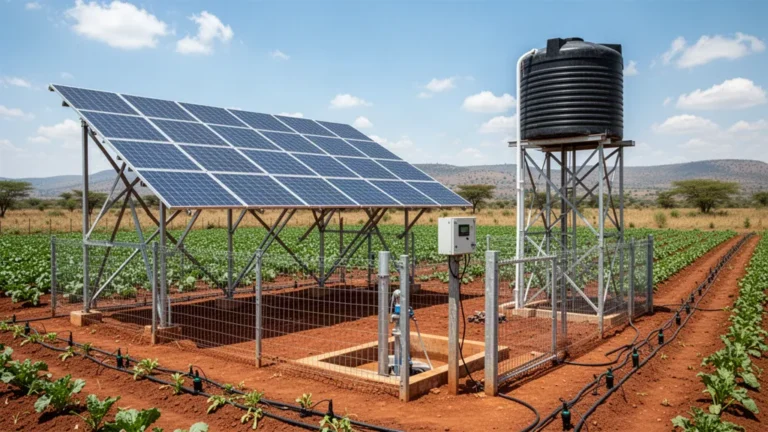
- Backup: a duty/standby pump arrangement or a solar pumping option improves resilience for critical sites.
Overflow and drainage
Every tank needs a screened overflow sized to carry the full inflow, piped to a safe drainage point. Uncontrolled overflow can undermine tank foundations, damage walls and flood neighbours. During heavy rains, check that gutters, overflows and site drainage are clear. Make sure overflow does not discharge near septic tanks, soakaways or borehole heads.
Water conservation
The cheapest litre to store is the one you do not need. Practical measures include:
- fixing leaking taps, cisterns and float valves promptly;
- installing water-efficient fittings;
- using harvested rainwater for flushing, cleaning and irrigation;
- drip irrigation and watering gardens early or late in the day;
- sub-metering large users such as kitchens, laundries and staff housing.
Tank hygiene
Stored water can become contaminated if tanks are neglected. Good practice:
- keep lids closed and locked, and vents and overflows screened;
- inspect tanks regularly, and clean and disinfect them periodically, and after any contamination;
- cleaning should be done by trained people following safe entry procedures. Never enter a tank alone;
- flush and test the system after cleaning, especially for drinking-water storage.
If your stored water comes from a borehole, see our guide on borehole water quality and treatment.
Building resilience for dry periods
- Combine sources where you can: utility, borehole and rainwater.
- Fill storage when supply is good, and keep a reserve you only draw on during outages.
- Service pumps, float switches and valves before the dry season.
- Know your daily consumption, so you know how many days your storage really lasts.
- Have an emergency plan for critical users.
How Weber Works can help
Weber Works Ltd designs and installs water storage and distribution systems, pumps and pressure systems and rainwater harvesting for homes, institutions and businesses.
This article is general guidance as at the review date shown. Structural elements such as tank towers and roof-mounted tanks should be designed by a qualified engineer.